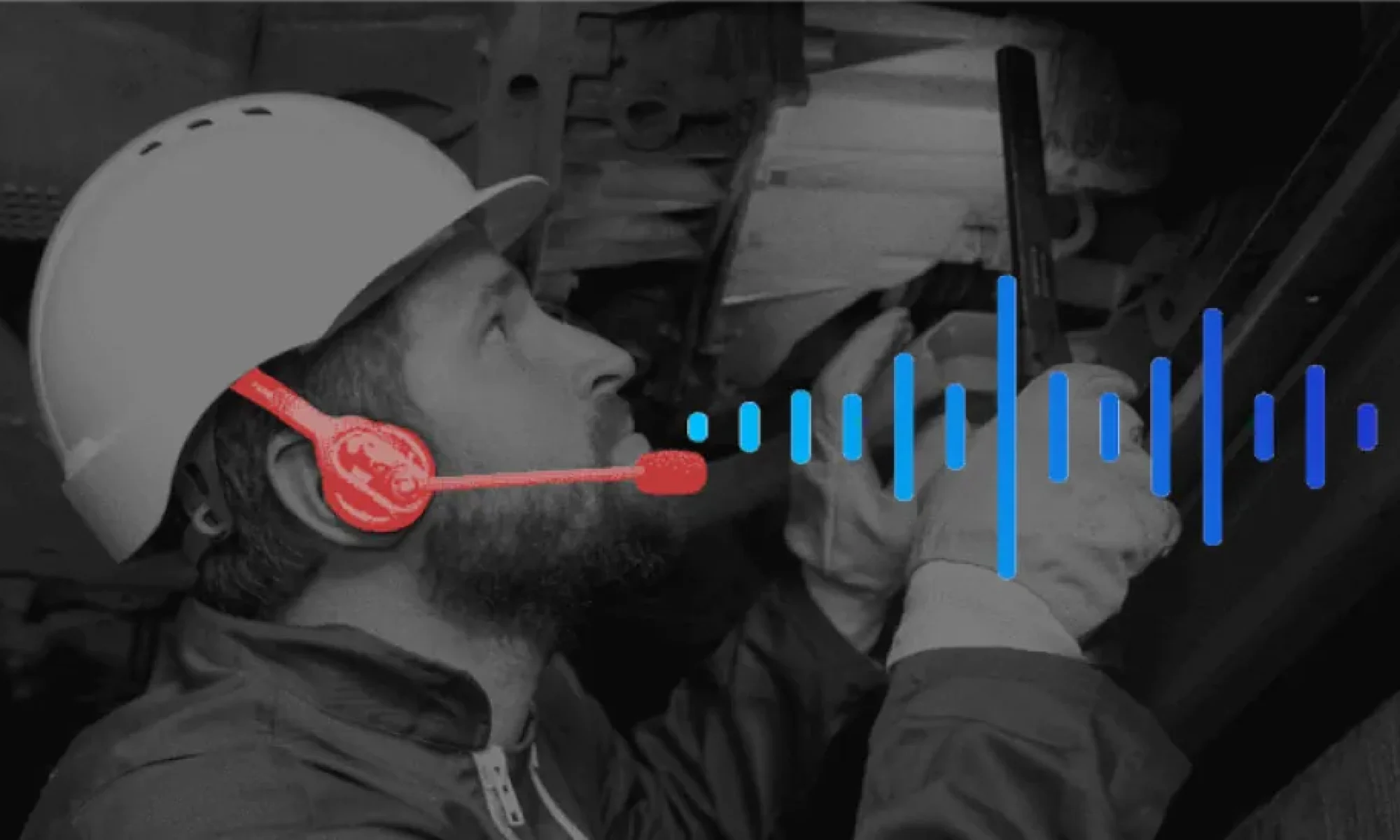
Industrial Intelligence vs. Artificial Intelligence: The Blind Spot of Digital Transformation


PDF article : Industrial Intelligence vs. Artificial Intelligence.pdf


Let’s get straight to the point: for years, we have been pursuing ” Artificial Intelligence ” as if it were a miracle solution to every industrial problem, while the real genius – what at SPIX industry we call Industrial Intelligence – has remained quietly hidden in people’s heads and on post-it notes.

By Industrial Intelligence, we mean the living, breathing knowledge of the factory: the operator who recognizes a motor by sound, or the engineer who detects when a valve is about to get stuck, or even the handwritten note stuck on the control panel that says ” do not trust the B2 sensor in rainy weather “.

This is what makes everything work, but it’s rarely integrated into a database. For a long time, this know-how wasn’t considered a valuable asset: technical knowledge had no real value, and collecting it provided no obvious return on investment.

Here are some figures to move from fantasy to reality regarding the actual adoption of artificial intelligence in factories or industrial processes:

  • Across Europe, only 13% of companies with more than 10 employees used any form of AI in 2024 , according to Eurostat (Eurostat, 2024). In manufacturing specifically, only 5% of European factories have extensively integrated AI into their processes, while 43% do not use it at all .
  • In France, 43% of factory managers give their factory a score of only 3 out of 10 for digital maturity , and only 13% give themselves a score higher than 6 (Mercateam, 2024).

So yes, the technology exists, but it’s not exactly storming the factory gates. On the shop floor, operators are still dealing with paper binders, Excel spreadsheets, and outdated software that doesn’t communicate with anything else. There’s a reason why “digital transformation” looks even more like “digital red tape.” And why the pilot projects are failing—not because the technology isn’t useful, but because it isn’t usable.

According to an IDC study, 90% of all enterprise data is “obscure data”—that is, it’s stored somewhere, but no one remembers where or why (IDC, 2024). Every time a skilled technician retires, a small library of know-how disappears. Every time a report is generated in a folder called “FINAL_V7_REALLYFINAL,” valuable knowledge is quietly buried.

Artificial intelligence systems can only learn from what they are given, and most of what they receive—in industry—is limited to PDFs, technical manuals, and generic datasets. Meanwhile, real expertise remains unrecorded and therefore unusable by any intelligent system .

The consequences of this lack of industrial intelligence data for the adoption of artificial intelligence are dramatic.

Artificial intelligence is incredible at generating syntheses and summaries. But there’s a problem: in reality , AI doesn’t remember anything . Ask it to summarize the last three reports—fine. Ask it why you made that decision—blank stare.

To get to the key point (because there is one): before building Artificial Intelligence, we must build Industrial Intelligence — the ability of organizations to remember, connect, and reuse their own operational know-how.

However, the problem is that critical knowledge is never documented, even with recent efforts to digitally transform industrial processes. Therefore, the obvious question is: how do we capture this Industrial Intelligence without slowing anyone down , and transform unusable data lakes into decision-support tools powered by operational AI solutions?


Typing on a tablet during a maintenance operation is not realistic. But talking? Talking happens quite often!

Field operators are already providing the data we’re missing—describing, diagnosing, teaching, and troubleshooting in real time. The problem is, it’s all for naught, despite numerous attempts at knowledge collection, knowledge capture campaigns, and the generation of technical white papers. While such initiatives have succeeded for sales, design, and engineering intelligence, most have failed at the production level. Something needs to change in this approach!

Obviously, we’re not talking about Alexa or PlaudNote in the workshop. We’re talking about a robust companion, capable of working offline, designed for a specific and demanding industrial context.

Imagine an operator saying: ” Recording: Pump 2A still vibrating, like last week, high temperature but stable pressure.

The assistant analyzes this single sentence and transforms it into structured data:

  • Equipment: 2A Pump
  • Problem: recurring vibrations
  • Details: high temperature, stable pressure
  • Recommended action: monitor

This simple observation instantly becomes part of the factory’s memory. Multiply that by hundreds of daily observations, and suddenly your factory is not just operating — it’s learning .

Now, when someone asks, ” Did any pumps show repeated temperature spikes before the failure?

A good on-site artificial intelligence might respond: ” You have 4 pumps that failed after experiencing temperature spikes over the last 3 months, the primary cause identified as recurring vibrations .” Not because the AI “guessed” it, but because someone captured the truth in real time three months ago .

And that’s where Small Language Models (SLMs) come in (you see, Artificial Intelligence!) — not the massive, cloud-dependent models, but smaller, specialized models capable of running on local devices, handling noisy environments, and understanding half-finished sentences. They don’t try to sound human; they simply make humans’ jobs easier.

Voice-assisted SLM can finally bridge the gap between what the factory knows and what its systems understand . They collect the missing context—the why, not just the what—and they do so without the employee ever opening a laptop.


Let us predict your next question, because we know you…

But while voice technology is clearly so useful,
Why isn’t it everywhere already?

There are several reasons – and none of them really have anything to do with the users.

First, there’s the noise . Factories are noisy and chaotic environments, and standard speech recognition systems struggle to handle the interfering sounds, accents, or protective equipment. Then there’s privacy and compliance —many sites prohibit cloud-based recording tools or devices for security or data protection reasons. Finally, there’s connectivity : Wi-Fi in the factory can be unreliable or nonexistent, instantly ruling out most consumer voice assistants.

And finally, cultural trust . Many operators have seen too many “innovation pilots,” and they’ve become skeptical of a new gadget that promises to “save time.” The first time I tried Alexa, she accidentally called me “Susan,” which put me off, and I stopped talking to her for a few months.


So, where do we begin to build industrial intelligence in practice?

  1. Let people express their knowledge

Give technicians a simple, voice-based way to record what they notice — not a new form to fill out, just a microphone that listens, with a clear understanding of its mission.

Make sure to dispel any fears or misconceptions about voice recording from the outset. The sole purpose of a voice AI solution is to collect technical knowledge , structure it, and make it accessible within the company. Nothing more, nothing less.

  1. Connecting human input to machine data

Connect these oral observations to sensor logs, maintenance reports, and environmental data—in short, your company’s IoT data. This is how you turn anecdotes into knowledge.

For those who are already one step ahead, you can link this human data to your Digital Twins. This invaluable source of information—the workers on the ground—can address the natural obsolescence of your Digital Twins.

  1. Stay local and reliable

Build small, on-site models that work offline and sync when possible. No one should lose a report because the Wi-Fi went down in the middle of the factory.


We all like to say ” data is the new oil ,” but where do we draw the line between truly useful data and data that only serves to fill pie charts on a PowerPoint presentation? The real opportunity lies not in adding new dashboards – but in valuing the daily experience of operators as part of the company’s living memory.

Ultimately, the most advanced factories may not be those with the largest AI stack. They will be those that remember their know-how, treat voice and context as high-value data, and build from the ground up. Because yes – artificial intelligence is coming. But it is industrial intelligence that will make it powerful. .

And perhaps that’s where the real transformation takes us back to the source: when the smartest thing in the factory is not the algorithm, but the living memory of the people who work there.


Point of contact
André JOLY – Managing Director
Tel.: +33 (0)6 25 17 27 94
Email: andre.joly (at) spix-industry.com

Legal entity
Website: spix-industry.com
Linkedin: linkedin.com/company/spix-industry
Simsoft3D SAS – 40 rue du Village d’Entreprises – 31670 Labège (France)
“Voice Experience “, ” SPIX ” and ” SPIX industry ” are registered trademarks of Simsoft3D SAS.

European integration starts now!


A few excerpts from the introduction can help us to understand the stakes of the 2026-2027 calls for projects of Cluster 4 for Europe and how SPIX’s voice AI solutions fit fully into this strategy.

  • SPIX’s voice AI solutions are dedicated to improving industrial performance by fundamentally transforming access to digital technology for field operations . This is the missing link needed to fully realize the true benefits of digital transformation in industry.
  • Industry in Europe will not develop without the men and women who work to improve production, maintenance, and quality processes. The vision of a 100% automated industry is now obsolete; the attractiveness of industrial jobs is becoming a real issue. SPIX’s voice AI solutions create a link between humans and complex industrial systems , in a human-centric approach.
  • SPIX places sovereignty issues at the heart of its development strategy . This approach resonates anew in the current European context.
  • With the data sovereignty solutions developed by SPIX, it is possible to guarantee the confidentiality of the industrial data being handled. What does confidentiality mean? In very concrete terms today: it means guaranteeing the immunity of industrial data from the American Patriot Act and Cloud Act.
  • On these two issues, the providers AWS, Google, Plaud, Azure, Copilote, OpenAI and others are not sovereign, and cannot claim their independence from the laws of their country of origin.
  • Europe is placing AI developments at the heart of issues of competitiveness , trust and performance, in total agreement with SPIX’s value proposition.
  • In addition to arguments of sovereignty and independence from certain extraterritorial laws, SPIX has been positioning itself for several years on simplifying access to complex systems and data through the use of voice assistance for operators.

In concrete terms, industrial synergies are being built around these calls for projects. Let’s take two examples from cluster 4 projects to illustrate the potential added value of SPIX’s voice AI solutions in the proposed industrial projects.

Industrial systems are becoming increasingly complex for field operators, and digital transformation has not always brought the expected simplification. It is therefore essential to change the game with radically different human-system interfaces.

SPIX’s voice AI solutions enable industrial operators to interact naturally, using voice, with a wide range of digital systems. This type of interface allows them to keep their hands free, allowing them to focus their eyes on safety and the tasks at hand. SPIX’s intelligent assistance features provide the contextual support operators need to ensure quality, versatility, and even skills development on the job.

SPIX brings natural voice interfaces to industrial projects, ensuring access to complex systems for industry operators. SPIX’s voice AI solutions are operational in complex environments with noise, security, and network outages.

When a natural disaster strikes, mission preparation and local knowledge are essential. The idea of a Digital Twin and innovative AI models for simulations is compelling. However, we know that a Digital Twin suffers from its own obsolescence from the moment it’s developed. Updating this data remains costly and time-consuming… unless we rely on the men and women on the ground!

In line with the “human-centric” theme, SPIX’s voice AI solutions enable field operators to provide relevant and structured information by voice to update Digital Twin data in real time.

SPIX provides Digital Twin projects with the essential link between models, technology, and the humans involved in their use. SPIX’s voice AI solutions are operational in complex environments with noise, security, and no network coverage.


The European Horizon Europe projects offer a glimpse into the state of innovation in industry. This new round of calls for proposals for 2026 confirms SPIX industry’s strategy, which focuses on implementing voice-based AI solutions to simplify access to complex systems for men and women in industry.

So let’s go, let’s build together the European projects that will allow European industry to remain competitive and attractive.


Point of contact
André JOLY – Managing Director
Tel.: +33 (0)6 25 17 27 94
Email: andre.joly (at) spix-industry.com

Legal entity
Website: spix-industry.com
Linkedin: linkedin.com/company/spix-industry
Simsoft3D SAS – 40 rue du Village d’Entreprises – 31670 Labège (France)
“Voice Experience “, ” SPIX ” and ” SPIX industry ” are registered trademarks of Simsoft3D SAS.